Showing posts with label Universal Design. Show all posts

Friday, November 21, 2008

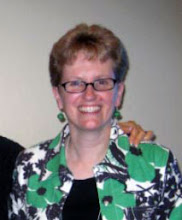
Guest Blogger: Author, Gary Presley


Today we have a guest post from fellow blogger (bloggist?) Gary Presley. He has published a memoir, Seven Wheelchairs: Life Beyond Polio about his experiences with disability and has been so kind as to share some thoughts with us about writing and about disability--enjoy!

Gary writes:


Let's face it. You need to polish your ego a bit if you want to write a memoir. Frankly, I didn't have much of one. I was raised as an Army brat, which means the "children seen but not heard" school of thought. Oh, of course, a child was "heard" occasionally, but it was to say "Yes, sir" or "Yes, ma'am."

But I do have a bit of ego. In fact, I sometimes display an off-beat, twisted sense of pride that I'm one of the few people you'll ever meet who has used a wheelchair for nearly 50 years. Of course, that didn't come easy. For too long, I was something of a jerk – and an angry, bitter one at that. With that mindset, it took me several years after I begin to write before I understood that there was a story worth telling about that long, seat-of-the-pants journey.

It began when I wrote an essay entitled "A Pot to Pee in," a whimsical meditation on what it means to use that little plastic bottle called a urinal. I thought it was interesting enough, especially because it begin in the bad old days before there were accessible bathrooms.

I belong to a writer's critique group, and several members read the essay and said "You need to write a book."

And so I did. I thought maybe I could offer the world an opinion or two about what we call "disability" – about it being simply another aspect of the human condition, about the need to integrate people with disabilities fully into society, about the ugliness of institutional care, and about the absurdity of the so-called right-to-die movement.

The book – called Seven Wheelchairs: A Life beyond Polio – was a multi-year project, but it was published October 2008 by The University of Iowa Press. Many readers have responded with notes that they've begun to regard disability differently because of my book.

Now here's the odd part of this saga: In writing the book, I taught myself something too – about myself and about disability.

I learned – no, really remembered and understood – how significant a sacrifice my parents made for me after I begin to live on wheels. I learned how deeply held the guilt I feel about that – not guilt imposed by my parents but rather guilt generated by my dependence. No one ever told me what every parent should tell a child with a disability: there is no blame related to disability. Disability simply "Is" – and it is only one of the qualities that makes the child a person of value, a person worth loving, a person of promise.

And what did I learn about disability? Mostly that things are better now than in the bad old days when I became a polio quad. Better access to education and employment are the two most important. On the other hand, there's one element in the "living disabled" lifestyle that still restricts full integration. That's social integration – the idea that many of us with mobility impairments and other physical and mental conditions remain isolated. Barrier-free home construction would go a long way toward fixing that problem – as would a concerted effort by people with disabilities, and their supporters, to never hesitate to move proudly and confidently out into every community activity possible.


(The picture at the top is a photo of the author, Gary Presley. The one at the bottom is a picture of the cover of his book, Seven Wheelchairs: A Life Beyond Polio.)

Update: The New York Times gave this book a rave review!!!!

Friday, January 18, 2008

Gap!


Futurist Ed Barlow spoke at the AUCD conference in November. He is a person with a background in management and experience in healthcare, business, higher education and consulting who monitors information about the things that are happening in business, the economy, technology, etc and tries to predict future trends.

This was the first time I had heard a ‘futurist’ speak at a disability conference and it was both fascinating and disconcerting. In a rapid-fire delivery style we heard his predictions for a world that will be changing drastically and becoming very different from today.

He spoke of a world where successful people speak Mandarin Chinese and maintain what he calls a mental desktop where they track changes and trends in a number of areas—global areas—daily.

He believes that people will need the ability to assess the global environment, predict needs, learn the information that will help them meet the needs they recognized, plan and respond accordingly while being aware of all the things that are continuing to advance while they work, in order to be successful. The image I have of this is a person sitting at a console watching at least 3 screens each with different stock information flashing at the top, a running line of information going across the bottoms and a another story being presented in the middle—and watching and retaining all of this at once.

He said that by the early 1970s human knowledge was doubling every 6 years, by the year 2012 it is expected to be doubling every year.

He predicted that the workplace of tomorrow would value skills more than degrees, that far more workers will work on a contract basis and that employers will no longer offer health insurance as a benefit (he made no mention of who would.)

He feels that most people will not get a university education and that most will attend community colleges for skill-based educations. (Did I just say that people will need more abstract and sophisticated learning abilities and that their education will be shorter and more technical? Yup, that’s what the man said.)

He spoke about population trends, the aging of America, the ethnic demographics of tomorrow, the style differences between generations and different business accountability tools that he believes will be helpful. He also touched on advances in technology and learning that he expects to have a great impact on the world of tomorrow.

Listening to the presentation all I could envision was an ever widening gap between the haves and have-nots in our society. I could envision the upper echelon of society moving into the future at breakneck speed, and everyone else struggling to keep up while folks with disabilities grow further and further and further away from the benefits of participation.

Seriously, is anyone teaching our kids Mandarin Chinese? Is anyone even teaching their caregivers Mandarin Chinese? How about their caregivers’ employers?

In my opinion it will take a feat of engineering to bridge this widening gap (think Millau Viaduct!) If he is correct we have a lot of work to do to establish a role for people with disabilities to circumvent economic segregation and keep people with disabilities connected within the society of tomorrow.

I think Universal Design (applied to all areas of life), the leveling of playing fields by extensive application of technology, purposeful, planned relationship-building in our communities and strengthened connections between people who have disabilities and people in leadership are some of the building blocks we will need to succeed.

What are your thoughts?

I would love to hear your ideas! Post your ideas in a comment below.

Wednesday, January 09, 2008

Listen to the Canary


A few years back our school district went through some administrative changes. Within weeks of the change the parents of children with disabilities were alarmed when they were notified that the district had changed the Education Plans of all of the children who receive summer services. These changes were made without holding a single IEP meeting— meetings that are required by federal law.

As the next few years unfolded many, many more problems came to light about the way our district was being administered. The Special Ed parents knew of the problems first. We often joked that our population was like the proverbial canary in the mine shaft.

Before the invention of sophisticated chemical testing equipment coal miners would bring a canary with them when they descended into deep mines. The canary would indicate the presence of poisonous fumes before the miners’ lives were in danger. As long as the canary sang the miners knew they would be all right.

In November I heard Michael Collins from the National Organization on Disability present as part of a panel at the Association of University Centers on Disability annual meeting. He was speaking about his organization’s priority of Emergency Preparedness. Collins stated, “People with disabilities are like the canary in the mineshaft—AND if they can keep us safe, or get us out, they can do it for anybody.”

This stands to reason. If our environments are accessible for people with disabilities they are accessible for all. While steps challenge many, a ramp works for everyone. How many of us have benefited from elevators and automatic doors? And who hasn’t followed the closed captioning when trying to watch the news in a crowded airport or catch a game in a noisy bar? If it works for the people with disabilities everyone succeeds.

It also seems to follow that it if we can meet the challenge of educating the kids with learning needs, we can educate anyone. And if we can address the healthcare needs of folks with significant disabilities we are able to provide care for anyone.

The same can be said for housing, transportation, civil rights, employment and more. If our systems can succeed with people with disabilities they can accommodate anyone. The Universal Design principles that architects use to create accessible spaces can be applied far beyond the accessibility of physical environments.

In my experience this even holds true for cultural issues. For example, if people with disabilities (including cognitive disabilities) are well integrated into a community, people with other differences are usually welcomed as well.

Conversely, when our systems have problems the ill effects are first noticeable to people with disabilities as well. Like the canary in the mineshaft the experiences of people with disabilities are often the first indicators of both society’s successes and its failures.
(Thanks to my friend Kathy who made me the miniature canary in the cage in answer to my picture dilemma!)