Showing posts with label Partners in Policymaking. Show all posts

Tuesday, November 25, 2008

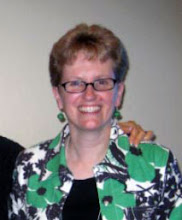
Surfers Healing Montauk: A Chat with Helene Fallon


Helene graduated from NY Partners in Policymaking in 2006. She is a parent of children with disabilities. Helene has a background in social work and became interested in educational programs as she pursued the programs her children needed. She now works under two grants funded by the State Education Department as a trainer providing technical assistance to families and school districts about special education and transition.

This September Helene and a team of organizations such as East End Disabilities and others hosted a Surfers Healing surf event for kids with disabilities and a very successful fundraiser.

I was in the area that weekend and I got to attend the events. I was amazed! First of all, this was my first time on Long Island. I had no idea that there was a place to surf in New York State! Secondly, this was a BIG event from beginning to end, so I talked with Helene to ask how they did it.

So Helene, how did you even get started?

Well, a couple years ago we heard about Surfers Healing and it seemed like a perfect idea for our area. We contacted the Paskowitz family who run Surfers Healing in California to see if they would consider coming here. When we found out they would, we put together a committee and got started. Long Island really needs recreational opportunities for kids with disabilities and Surfers Healing seemed like a great place to start.

We started small 2 years ago with a few surfers and our fundraiser that year and last year raised about $1000. Our committee was from all over the island and we were united by the over-arching goal of eventual sustainable recreation for kids with disabilities ‘on the island.’

This year they kicked it into full gear:

They had more than 100 volunteers (organizers, lifeguards, surfers and more.) And their fundraiser featured Jimmy Buffett—he has a house on Long Island and he and his staff are very dedicated supporters of kids with disabilities.

Despite questionable weather—overcast through the surfing, POURING through the (outdoor) fundraiser—they had 120 surfers this year and the Jimmy Buffett concert and silent auction raised more than $100,000. (I nearly drowned, but couldn’t have had a better time!)


AND!!! The first meeting to plan an ongoing swimming-sailing-kayaking program including kids with disabilities on Long Island was held in October!

Helene’s advice:

Rely on partnerships, connections, networking and teamwork. Keep relationships going by staying focused on the team’s goal.

-Don’t accept barriers. Find partners that share your vision and keep going!

-Focus on staying organized.

-Keep at it—amazing things can happen.

Monday, April 21, 2008

Autism Awareness Month: An Interview with Julie Buick


During Autism Awareness Month I have invited some of my friends who know autism far better than I do to post on my blog. The following is an interview with my friend and fellow Partners in Policymaking graduate, Julie Buick. Julie graciously spent a couple of hours this week regaling me with stories about herself, her family, her thoughts on Autism and the importance of community.

Tell us about yourself and your family:

I'm a mom. A wife, a mom and an advocate. I have 3 children: a 13 year old daughter, and 2 sons who are 9 and nearly 6 years old.

And we can't forget my husband, Bill. He's my rock! We have been together for 19 years!

My 2 boys both have Fragile X and Autism. Though they have the same diagnosis, they are completely different. One of them has issues with OCD, stimming, sensory processing disorder and lots of allergies--the other has different symptoms and needs.

Autism is the fastest growing developmental disability with--as yet--no known cause or cure. It affects 1 in 150 children. A new case is diagnosed every 20 minutes. This year there will be more children diagnosed with autism than AIDS, diabetes and cancer combined.

What do you want folks to know about?

I think the most important thing is the community and belonging. We want a community that will accept and welcome our boys and treat them like we do. We aren't going to be around forever--the community needs to be ready.

We work toward inclusion for both of our boys. They go to different schools and they are progressing toward inclusion. Last year my older son was in a situation where his classroom was "in" a school, but not part of it at all. This year is different. This year his classroom "belongs" to the school--kids say "hi" and spend time with him. He is so much more excited to be there--he walks taller. His team and their faith in him make all the difference.

I do a lot to help get the community ready--for my kids, and for all kids with all disabilities. I give talks to teachers and schools and at local colleges about disability awareness and autism. I talk about individualizing, having a can-do attitude. If I can just educate people I can take the fear out of the unknown.

I tell them that for us autism is just a label for services. We don't deal with autism at home. We just accept our kids for who they are.

I think accepting them is key. People always ask me how I cope and I tell them I don't. It's not "coping" if you accept your children. We definitely do different things for our kids than we would if they didn't have autism but it's because 'Bobby needs this' or 'Billy likes that,' or ' Katherine wants something else.' Every parent and every child wants or needs different things in any family. That isn't "coping," it's parenting!

I don't have trouble with "coping." I do have trouble finding enough time to do all the things I want to, but everyone says that!

What is the role of advocacy?

Advocacy is crucial--and it isn't a coping skill either! Advocacy is not a choice--it is the way you get everything, change everything, and make things work.

All parents advocate for their kids at some point. It's just what you do,

I know you always have lots going on--what are you working on lately?

You have to understand that I do take on a lot because I CAN. Not everyone can or wants to do all this depending on their life and their child, what's going on at home, etc.

I have great support at home--my husband enjoys being at home with the kids and supports my efforts.

I worked overnights for years so I would be home during the days for meetings and such. I still work for the same agency, but now I work at the Pieters Family Life Center which is a community center (totally inclusive!) In my job I get to run SibShops, a Spectrum Family Support Group and more.

Outside of work, I am:
• a presenter with The Advocacy Center providing disAbility awareness presentations in our community through the speakers bureau,
• Vice President of Operations for UNYFEAT (Upstate New York for Effective Autism Treatment which is the largest not-for-profit-501(c)3 in the Rochester area) Right now we are working to bring the nationally known organization Lose the Training Wheels to Rochester for a clinic this summer.
Autism Speaks Chapter Advocacy Chair for Upstate NY region is yet another hat that I wear and a very important one. My Autism Speaks hat is the one which helps get much needed money for research.
• Training for a 10k run!

Autism costs our nation 90 billion a year and that is expected to double within the next decade. Our communities and our nation cannot afford NOT to know about Autism.

We need to raise awareness, find answers through research and provide appropriate educational services to teach life skills so that our kids become productive, healthy, happy adults, working, playing and living in our communities.

Now is the time to make a difference!

Any closing words?

I love this quote:

Never doubt that a small, group of thoughtful, committed citizens can change the world. Indeed, it is the only thing that ever has. - Margaret Mead

Saturday, April 12, 2008

Autism Awareness Month:Guest Blogger Monica Moshenko


Since I do not have a connection with Autism myself I offered my friends who know more about Autism than I do the chance to guest-blog here. Monica is the parent of an awesome son with Autism and a fellow Partners in Policymaking grad (from my class, actually!) She is also the host of Disability News and Views Radio. This article of hers was originally published by Autism Today. PS: The house in this picture is for sale so if you are looking to move to Bufflo, NY leave a comment!

Finances an Added Burden for the Disabled and Their Families
By Monica S. Moshenko
Power Advocates, Inc.

For those of you who have a child with a disability, or are an adult with a disability, finances play an integral role in the services and supports that are needed. There were times in the last few years, when I made choices to pay for a therapy my son needed, instead of paying the phone bill or car payment because the health insurance company often limits the frequency or doesn't even cover it.

I have known far too many families who had to sacrifice so much to ensure that their child receives the interventions and attention they so desperately require. Some parents have had to refinance their homes and often go without the many "extras" that many others seem to have- the second car, vacations, and even going out to restaurants, to pay for ongoing medical costs which usually aren't covered by typical HMO's. For the parent or adult who doesn't have any health insurance, there are increased challenges and stresses accompanied by this problem, making life extremely difficult. There are resources that parents of disabled children and disabled adults can apply for in New York State, as well as national resources I want to provide for you.

One program called the "Medicaid HCB Waiver Program" which allows States to take Medicaid funds that were previously only available to institutions, and apply them to community and home-based programs.

According to the U.S. Dept. of Health and Human Services, "Medicaid's home and community-based services waiver program affords States the flexibility to develop and implement creative alternatives to institutionalizing Medicaid-eligible individuals." Many individuals can be cared for in their homes and communities, preserving their independence and ties to family, and friends, at a cost no higher than that of institutional care. When these programs are provided, the individual also becomes a contributing member of the community, thereby enriching all of our lives.

Some of the services that maybe provided without prior approval of the Federal government through this program include: Case Management Services, Homemaker Services, Home Health Aide Services, Personal Care Services, Adult Day Health Habilitation and Respite Care Services.

Other services which maybe provided with prior approval include: Transportation, In-Home Support, Meal Services, Special Communication, Minor Home Modifications, and Adult Day Care.

To apply for the HCB Medicaid Waiver, you need to have documented information about the disability, along with information of how the disability affects the person's daily living. Your income is not a factor when applying for the HCB waiver.

Waiver services may be provided to the elderly and disabled, the physically disabled, the developmentally disabled and mentally ill. Waivers may also be targeted to individuals with a specific illness or condition, such as technology-dependent children or individuals with AIDS.

Under the waiver program, States can make home and community based services available to individuals who would otherwise qualify for Medicaid only if they were in an out of home setting.

Contact a Caseworker from an agency such as People Inc. or Heritage Centers (see the list of resources which follow) to begin the application process, which can take several months. Once the application is completed, it is submitted to a review committee at the WNY DDSO. When a decision is made, a letter is then sent to the applicant and the agency that you are working with. If you are denied, you can always apply again, perhaps submitting more specific information or you can request a Fair Hearing for further review of the application.

If you have an adult child with a disability, they may be eligible for either SSI (Supplemental Security Income), or SSDI (Social Security Disability Insurance) regardless of your income or assets. Both of these programs provide money to people with disabilities who aren't capable of "substantial gainful activity" or SGA. If a physical or mental impairment prevents your adult child from doing any job that will enable him or her to independently earn $500 or more per month, he or she may be eligible for either SSI or SSDI if other requirements of the program are also met.
§ SSI requires that in addition to being disabled and incapable of SGA a person must also be poor. SSI sets limits on the amount of money one can earn in a month (countable income) and on the value of money or property owned (countable resources). It is important to note that once a child reaches 18 years of age, his or her parents' income and resources are not counted for SSI eligibility.

SSDI is only available to people (including their dependents) who have paid into the Social Security system by working a required amount of time. Dependent adult children are eligible for benefits under their parents' work record. Dependent adult children are defined as becoming disabled prior to the age of 22, single, and incapable of substantial gainful activity. If the parent fulfilled the required SSDI work time and then dies, retires, or becomes disabled, a dependent adult child will receive cash benefits based on that parent's earnings. It is important to note that the child does not need to be poor to receive the cash benefits, nor does the child have to live at home. (Excerpted from "Adult Child Benefits: Social Security 101," by Theresa Varnet, Exceptional Parent, September 1997)

There are a variety of work incentive programs for individuals with disabilities who wish to work without immediately jeopardizing their SSI/SSDI benefits. The Work Incentives Improvement Act (WIIA), introduced in Congress on January 28, 1999, would allow beneficiaries of SSI and SSDI to work without losing their Medicaid or Medicare benefits. More information about the details of these programs, eligibility requirements and work incentives can be obtained from a variety of sources including the Social Security Administration at 1-800-772-1213 (TDD: 1-800-325-0778) and the NYS Dept. of Labor at (518) 485-6176 or email usacjv@labor.state.ny.us (New York Works: Self-Sufficiency through Employment Initiatives). This program is being offered in Buffalo.

I have listed local and national agencies that provide information, support and assistance. Local churches should be providing some assistance to the disabled as well (i.e. food, clothing, counseling, financial)


NATIONAL RESOURCES
The Brass Ring provides grants to fulfill the dreams of children who suffer from a life threatening or terminal illness. Phone 1-800-666-WISH Website: www.worldramp.net/brassring/

Disability Funding News is a national newsletter covering federal and private funding for people with disabilities. Phone 1-800-666-6380 Website: www.cdpublications.com/funding/dfn.htm

In His Name Ministries, an interfaith, non-profit charitable organization that addresses the news of the disabled, elderly and the struggling single.
Phone 1-405- 706-6295 Website: www.inhisname.org/ email dee@inhisname.org organization that addresses the financial needs of the disabled, elderly, and struggling single

The Make-A-Wish Foundation grants wishes to children under the age of twelve with life threatening illnesses. Phone 1-800-722-9474, Website: www.wish.org, email MAWFA@wish.org

(Correction: They actually grant wishes to children between the age of 2-1/2 and 18 with life-threatening medical conditions.)

National Rehabilitation Information Center (NARIC) provides referrals for persons with disabilities to organizations that may financially assist them in a variety of ways (i.e. education). Phone 1-800-346-2742 Website: www.naric.com

National Organization of Social Security Claimants Representatives (NOSSCR) is an association of attorneys and paralegals who represent Social Security and Supplemental Security Income claimants. Phone 1-800-431-2804, Website: www.nosscr.org. and email nosscr@worlnet.att.net

Physician's Disability Services, Inc. is a publishing company that helps people with disabilities prove their Social Security disabililty claims. Phone 1-410-431-5279 Website: www.disabilityfacts.com and email smith@disabilityfacts.com
The Sunshine Foundation grants wishes to chronically, and terminally ill, disabled and physically abused children ages 2 ½ to 22. Phone 1-941-424-4188 Website: www.sunshinefoundation.org, email sundv@gte.net

To see other posts on this blog click here.

Friday, February 08, 2008

Partners in Policymaking


Partners in Policymaking, an advocacy training program for adults with developmental disabilities and family members of people with developmental disabilities was started in 1987 by Colleen Wieck and the folks she worked with in Minnesota. This extraordinary group of people felt that if parents and self advocates had the appropriate skills and information, they could improve the lives of people with disabilities in their communities, in their states and the nation.

In the US Partners in Policymaking is federally funded through the Developmental Disability Act and administered through each states DD Council. In NY it is funded byt the Developmental Disability Planning Council and directed by Joyce Steel of The Advocacy Center.

I applied to be in Partners in 2002 and was accepted so one weekend a month for 8 months I made the 4 hour trek to the state capitol (Albany) to take my course. There were lessons on public speaking (“the microphone is your friend!”), person-first language, building life-visions, inclusive education, housing, community-building, the legislative process, rights, advocacy skills and more. We learned to speak publicly, to present testimony and to be attentive to each others strengths as well as accommodate each others' needs.

Partners in Policymaking is a leadership program and the presenters on each topic are top-of-the-line. My class heard Deborah Whitfield on person-first language and disability history, Al Condeluci on community inclusion, Lou Brown on transition and employment, Tom Harmon from the NYS Commission on Quality Care spoke about Willowbrook and taught us how to give public testimony, Pat Johnson from NYS CQC as well spoke about New York’s legislature, Jean Tellier spoke about housing issues, Curt Decker from NDRN taught us how a bill becomes a law and about working with legislators. And the list goes on: Rob Davies then at OMRDD spoke about housing issues and rights, Carol Blessing spoke about transitioning to adulthood and Sue Cullen presented on self-determination.

Cutting-edge ideas and principles are taught every year. Some classes have the opportunity to hear different speakers.

Being away once a month wasn't terrible either! It was always hard to disengage from my home life, but they were fine and so was I!

And as good as the presentations were, the relationship that was built between my classmates was by far the best part! I shared my Partners class with and extraordinary group of people. We were a diverse group—many races and religions were represented, there were people who came from the largest city in the country and from towns so small you can’t mapquest them, and we had a vast variety of ability levels.

At the first session, like most people, we circulated the room looking for people just like us to hang with, but as the sessions went on common ground was built and all of us expanded our definition of “just like us” to include everyone else. That diverse group of folks became a support system—-I can’t tell you how many times an issue would come up at home that I would tag to discuss when I got to Albany (and I can’t tell you how much I missed that when it was over!)

We learned to talk so that all of us could understand and we supported each other so we all shone—I helped one of my Partners remember to take his meds and he kept me on time schedules (He still does today. Thank you Jason!)

And those relationships continue today—with our own class and with the other graduates from across the state. In NY we have a graduate website and list-serv and when I am taking up a new project the phone line from here practically burns up with calls to the Partners I know who have experience with my situation in their town. We frequently unite on common issues as well. Among other things we have rallied for IDEA, in support of a family who lost their son who had autism to abuse, and we took part in a phone/fax campaign on burden of proof last year.

Let’s see, have I said it all? Great speakers, awesome content, leadership skill practice, full-immersion diversity training, ongoing friendships and a dynamic statewide network…

And do I have to say that all of this experience is an asset in your whole life?

The only thing left to say is: Find the program in your state, apply, attend, and learn to conquer the world!

(NY’s applications are available now, due March 14. Classes start in May and I’ll be presenting!)

I invite other Partners grads to share additional information and thoughts--just click on the comments button below!