Tuesday, August 11, 2009

Astounded by Grief


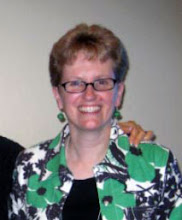
Keith is in front on the right. My husband is front left. Family camp... Breakfast.


Our family friend, Keith--young, in shape, healthy--was away on a business trip and died. My heart is broken. He leaves a wife and 3 young kids and loads of friends and family who are stranded in the land of faith and pain.

Keep us in your thoughts, won't you?

Sunday, August 02, 2009

internet/Computer Issues Resolved (Mostly!)

Yeah, I got up to 175 posts and then all the computers (3) and a router died... It has been a month of figuring the whole mess out and I am back. AND I have spent the last 4 days at the National Down Syndrome Congress Conference in Sacramento and I have SOOOOO much to tell you. I am bursting.

Really!

There will be several posts over the next several days. Just warning you...

Hope you've missed me. I sure have missed you!!!!

Fondly, Terri

Saturday, June 27, 2009

NVLD and Social Learning


During my Partners in Policymaking course I was privileged to hear Al Condeluci speak. Al is the Executive Director of UCP in Pittsburgh. He grew up with a cousin who had Down syndrome and has been a lifelong proponent of quality lives, relationships and belonging for people with disabilities.

His talk at Partners was a how-to seminar on joining and belonging to integrated groups for people with disabilities. His warmth and enthusiasm were contagious and his strategies were completely practical and useable--and honestly would work for anyone.

He said that people usually join groups around interests like gardening or trains or photography or Civil War re-enactment rather than around characteristics.

So the first step is to determine an interest. After that, there are a few things to observe:

* People who BELONG in a group share a common vocabulary (for example for photography: camera, film, digital and flash for starters) as a beginner you don't need expert vocabulary, but try to learn some of the basics.

* There are social customs or patterns that people who BELONG to a group observe. For example, certain people always sit in the same seat--if you wish to BELONG, do NOT sit there. Watch the group for a bit to notice the way things are 'always done' and respect that. You can make additions and help with changes once you really belong, but NOT in the beginning.

*Groups follow a typical bell curve. 20% Negative, 60% undecided (waiting to be seduced is what Al called them!) and 20% what Al calls Positive Gatekeepers. Many folks make the mistake of begging for the good graces of the negative folks which they will NOT ever give you--forget them. Observe the group to figure out who the Positive Gatekeepers are--they are the conduits to belonging. They will say "hi, come with me, let me introduce you to everyone!!" because that is just who they are.

*Introduce yourself to the positive gatekeepers and ask them to bring you aboard.

I went home from Partners and tried this out a number of times for my daughter who has Down syndrome, with excellent success. I never gave it much thought for my son, until one summer he was in a drama group and bringing a book with him to read on breaks.

I mentioned to him that people who saw him with a book probably wouldn't talk to him much because they would think he was busy... He said the kids were playing cards during breaks and hadn't asked him to play.

Thankfully, I thought of Al's talk.

"Do you know how to play the game?" I aked. He said he had watched and thought he did know the game.

Then I pulled out my notes and showed them to him. He had indeed noticed some of the social customs I was talking about.

The next day he want in, book in hand, to watch for who the positive gatekeepers might be.

He came home with a person in mind.

He said it would be awkward to ask, but I assured him that positive gatekeepers do this for everybody and won't even notice. Then we had to come up with a question to ask. He decided on, "I think I have figured out how to play the game, could I try?"

The next day he got out of the car with his book again...

When I picked him up he told me he had played cards all day, and the next morning I noticed he left his book at home.

Continuing Growth.

It has been several years since that summer cardplaying success. Social stuff still doesn't always come easy, but it is ever improving.

My son still starts conversations in the middle without giving context sometimes... and he still is more comfortable with smaller groups than larger ones. And I am always looking for strategies that I can explain that will expand his repertoire. (In fact he read this post by Stephen Drake and said he was going to remember this to try.)

And two weeks ago he went to a big end-of-the-schoolyear event. When I went to get him I expected to see him sitting at a table, or pacing around the activity as he often does. But no. He was out on the dance floor in the midst of a huge group of kids dancing like a wild man--like everyone else...

Will he be able to do that every time? Who knows?

Frankly, no teenager is socially smooth every time!

Growing and learning are lifelong processes for EVERYONE--NVLD or no.

Tuesday, June 23, 2009

Non Verbal Learning Disorder and Social Learning from the Beginning

One aspecct of Non Verbal Learning Disorder that many folks find challenging is a lack of social fluency. Fitting in can be very tricky.


For my son this is an area where he is continually growing so I thought that I would (with his permission) share some of our experiences.

When my son was little--long before he had a diagnosis--he would have reminded you of Lt. Commander Data from Star Trek: Next Gen. He spoke in a sort of clipped way, he did not use contractions, and the timing of his responses in conversation were delayed.

Over the years this dissipated. People that we camped with every year remarked at one point that it used to be when you greeted Tom he would take forever figuring out who you were and why you were talking to him before he could answer. "Now," our friend said, "when I say hi, he says hi--it's great!"

Neighborhood interactions could be a bit tricky between his hesitant style and his very literal thinking. Another 4 year old (or more likely, 6 year old) yelling "I'm going to KILL you," would send my son running home in terror.

He was about 4 when I explained that 'exaggerating' means saying something much bigger than you really mean to make things sound exciting. I would make a big show of saying "I told you a million times," or "That was the loudest noise in the WORLD!" and I would compare flying bugs to birds, or airplanes.

Once my son got the hang of it he LOVED it. He thought it was so funny.

And the next time the kid down the street yelled at my son that he was going to KILL hiim, my son turned to him and calmly said, "Exaggeration." Since the drama was gone the kids pretty much stopped pushing that button.

And I learned that I could explain social things to Tom and he could get it.

Not long after that I had the opportunity to mention to him that crying makes mean people meaner. He thought that was just awful (and so do I) but he saved what he could of his need to cry for the safety of home.

Another fun lesson was puns.

At dinner when I asked him if he wanted to put cheese on himself he would answer in horror, "No, on my spaghetti!"

Or if I asked if he wanted me to put his coat on he would tell me that it wouldn't fit me.

Which would have been hilarious, but he was serious.

So I pulled out the primer of punniness, Amelia Bedelia, and 'splained it to him... again, once he caught on, he couldn't get enough. He graduated to the Xanth "Trilogy" by Piers Anthony by the time he was 12 for the sheer joy of it. Frankly, I think much of his enjoyment is because his first thought is still so literal.

Next up: Joining groups.

Tuesday, June 16, 2009

No Drive Through Life and Wrongful Birth


I have blogged before that many years ago when I was single, years before my daughter was born with Down syndrome, I believed--and told people--that I thought I would be fine if I ever had a child with a physical disability, but not a cognitive disability.

I have always pictured God hearing my little declaration and rubbing his metaphysical hands with glee. I picture God knowing that that that thing I dreaded would be one of the best gifts of my life. I picture the anticipation of my being surprised by joy I could not even imagine making Him smile the way I smile about the Christmas presents I have hidden for my loved ones...

When my daughter was born we had a few hours of shock and I was given a quick lesson on disability philosophy by a dear friend of mine who has CP, and another by the guy who answered the phone for our local DS group whose first word to me on hearing our news was, "Congratulations!"

Then we were on our way.

Having our third child meant all the joy and sleeplessness any new baby brings to a family.

That she has Down syndrome meant that and so much more. We were introduced to the parallel world of disability and all of the amazing folks who live there, we got to learn about and appreciate the hundreds of intricate steps involved in any piece of human development, we had to be resilient, we had to be creative, we had to learn new skills, we had to be intentional and 'attentional' about all manner of things we never even knew existed before.

Some things were easy and some have been very difficult. But I have indeed learned that things that are easy are often not as valuable as the things/relationships we must invest in.

We couldn't have a drive-thru life--we experienced the slow-food alternative. We have layers of complexity and relationship that have meant we must always engage with our life and as Robert Frost wrote, "That has made all the difference."

These opportunities for learning and growth have enhanced the lives of our whole family.

Beyond this, the things I have learned have given me the opportunity to give back--to share the things I am learning with others along the way. I have learned advocacy and public speaking and gained a sense of purpose that I never had before.

My husband and other children have benefitted as well. The common purpose of parenting a child with a disability has enhanced our family life on all fronts--the fact that Jenn is a great kid makes it fun too!

My older children have a sense of justice and an awareness of social issues and have had the opportunity to speak out in many forums that other kids their age have not. They have both taken an active role in helping Jenn learn and grow and the responsibility and maturity they have developed is already helping them at school and work as the begin to make their way in the world.

Last week a woman I met commented to me about my daughter with Down syndrome saying, "Well, sometimes we don't get the life we ask for so we just have to make the best of things..."

"Actually," I replied, "I have a much better life than the one I asked for--I wouldn't change a thing!"

She seemed very surprised.

I went home and told my kids about my conversation.

My daughter said, "How do people not get it?? I actually feel sorry for families who DON'T have a kid with Down syndrome!"

I laughed because, to tell the truth, so do I.

Now, I had this all written and that line was supposed to be the end until I read this article.

A family in Oregon is seeking big bucks from the doctors who did not diagnose their toddler's Down syndrome pre-birth. They state unequivocally that their daughter has changed their life and they would have aborted her if they'd known.

This article made me physically ill.

First of all I feel heartbroken for the family whose experience with their daughter has not been as positive as mine.

Secondly, it frustrates me that this story has made the news. My story about the positive impact disability has had on my life will never have the credibility with our ableist society as this family's story will because our society fears disability and WANTS excuses to opt out of dealing with disability and those who have them.

I know families whose experience with their typical children has been extremely unpleasant as well for various reasons, this isn't necessarily a disability issue, but disability will undoubtedly be blamed.

Thirdly, I am desperately saddened for that little girl and her siblings growing up in a town that knows that her family would have aborted her if they'd known her. Who will want to babysit her or be her friend? What will kids say to her and her siblings on the playground? And how will this stated need for perfection affect hers and her siblings' sense of security with their parents? I can't imagine any amount of money that would be worth the cost.

Picture from here.

Sunday, June 14, 2009

Book Review: Disability is Natural


One of my favorite disability books of all time is Disability is Natural by Kathie Snow. I have referenced it many times on this blog, but have never reviewed it.

Well, Kathie spoke in my area recently and I was there. I had lost my copy of her book some time back so I picked up the new, revised, 2nd edition (and had it autographed, naturally!) and read it again...

I still love that book!

The book begins with a primer about disability through history and then goes on to discuss disability today, and then on to ways to change things for our own kids for the future.

Kathie applies what she calls Revolutionary Common Sense to life with a disability in our society from birth through adulthood and shows how the sub-standard, sub-poverty level, un-real lives that are a reality for so many folks with disabilities are created. She de-constructs EVERYTHING--things we hate like institutional programs, and things we love like early intervention and therapies, and everything in between.

Kathie believes that "It is just as natural (for human beings) to have a disability as it is not to," and as a result believes that the structures that exist to 'fight' disability, or accentuate inability or difference in our society must be replaced.

Period.

She advocates for replacing everything with a positive belief about disability and creative ideas for building "real lives" for all people with disabilities IN our society.

She teaches about natural supports, a belief in Assistive Technology as a FIRST resort to give people mobility or communication--not as a last resort turned to when people have been years without them. She teaches about person-first language and the idea that we are not aiming for 'independence' but for healthy interdependence.

Much of Kathie has written is hard to read because it makes us look long and hard on our ideas about disability--some of which we truly cherish... and if you envision a coddling, segregated life for your child, or if you need to be told that every recommendation your district makes will be PERFECT for your child, this book is not for you!

I don't agree with every idea in the book, and have made decisions now and again for my daughter that I know Kathie would not.

Yet, I LOVE this book.

I NEED this book.

I find it challenging and clarifying and energizing.

It is way too easy to drift away from my beliefs about my kids because of professional input, school district's capacities, the challenges of everyday living, etc. I aim to compromise and end up being compromised--and I often don't even realize it has happened. This book makes me think, adjust and get back on track--for a while!

In her seminar Kathie told a story about her son, Benjamin who has CP. When he was little he did tons of therapy and the therapists said he should not get a motorized wheelchair because if he did he would never walk.

Kathie had also made friends with disabilities through her state's Partners in Policymaking program and one man with CP told her over and over to get him a motorized chair so he could LIVE.

She finally listened to her friend when Benjamin was 9. She said that afternoon he went out in the backyard to play... by himself... for the first time in his life.

That made me cry.

She said he still can't walk, but doesn't think he would have anyway--and she thinks that is fine. Inability to walk is not a problem, lack of mobility is.

As for Benjamin, he's gotten to zoom along with his friends anywhere he wants since he was 9. He is now going to college. And he thinks that if a trade was made, it was a fine one.

This book is challenging in the extreme, and absolutely worth every cheerfully prickly moment!

Read it, I dare ya!

The photo above has me at the top, fellow NY Partners grad Jenn Machucki on the left and author Kathie Snow on the right. To read an article by Jennifer Machucki click here.

Saturday, June 06, 2009

To Battle or Not to Battle is NOT the Question


The conventional wisdom about life--and about disability--is that everyone should "pick their battles" in order to save energy.

On the surface this seems like reasonable advice, but some people interpret this statement to mean that the two choices available are DISENGAGE or WAGE WAR.

It's just not that simple--or that drastic. And since whole groups of people (including yourself!) will have to live with the consequences of your approach to advocacy, some things need to be considered.

To start with, the phrase should be "Pick your strategies," not "Pick your battles."

There is no escape hatch. Alice in Wonderland could escape down a rabbit-hole to an alternate universe, but that option is only available to Alice and bunnies--the rest of us need to live here. (Which is really ok, have you READ Alice in Wonderland?? Wonderland is a VERY strange, unsettling kind of place!)

This being the case, we need to make our home here--in our schools, and neighborhoods and communities.

We are home-making. Not escaping. Not battling.

In this light there are several things to consider when approaching situations.

To begin with, conflict is normal. People are different and have different viewpoints. Conflict is not scary or negative, it's a sign that you're alive.

And alive is good.

The trick is not to avoid conflict, but to manage it.

So, where do we start?

Step 1: Evaluate: Does the issue matter? Don't waste your energy managing issues that don't matter.

An issue doesn't matter if it has limited or superficial impact, or if it will go away on it's own in a reasonable amount of time. I put matters of taste and style in this category most of the time...

Kids' hairstyles don't matter. Kids'clothing styles don't matter (though modesty and cost and a few other things do!)

I think it was my dad who told me that adolescence and snow both go away on their own if you leave them alone long enough... I don't always remember this, but I try.

My kids (and husband!) eat their eggs with ketchup. I think this is disgusting. Yet, it does not matter. I will tease my kids and they will tease me about this for fun, but not one volt of my energy will be devoted to changing their egg-habits. (Though if they WANTED to change, I would be supportive! :)

If it doesn't matter, it doesn't matter. Relax, enjoy, go swimming!

Step 2: If an issue does matter, it is WORTH addressing.

Any un-managed or unresolved conflict causes more and more and MORE conflicts to deal with (my friend believes there is a mathematical formula for this. I'm sure it involves exponents... if someone finds one let me know!) For example, if you don't address the aide that treats your child dismissively, pretty soon lots of people have learned that behavior from them... YUCK.

Beyond this, even though it can look scary, managing conflict is a valuable process. Working through differences with people builds your relationship with them, earns respect, builds your own skills, and it makes the situation you are living in BETTER.

Talk about win-win-win-win-WIN!

Step 3: Conflicts are resolved (almost always) by negotiating, not battling--and as Ruth at Wheelie Catholic points out, not by arguing (who says there's no such thing as a psychic friend?!)

You negotiate, discuss, use laughter, ask questions (read my posts on Unexpectedly Effective Advocacy Skills here.) You hold Crucial Conversations and you Get Past No...

Managing conflicts that matter through negotiation is like caring for that swimming pool. It can be hard work, there is a definite process to it, it can get a bit dirty, AND it builds a healthy environment for you to enjoy.

If a pool owner quits tending the pool mid-season, or blows up the whole mess in a fit of rage, things get awful pretty fast and no one gets to swim.

Step 4: Finally, some issues matter a lot and cannot be resolved through negotiating alone. Sometimes it is necessary to move from Crucial Conversations to Crucial Confrontation.

These problems pop up relatively rarely, and when they do you MUST respond accordingly. It becomes time to 'pick your battle.'

When you must battle, strategize--a temper tantrum is not a battle plan. Neither is wishing or whining.

Get help, commit to the process, arm yourself with information, allies, and tools.

And. Win.

So you can get back to poolside!

Picture from here.

Thursday, June 04, 2009

Inspiration and a Call to Action


My daughter introduced me to this song from Ragtime last year. My son heard the following quote in History this year and thought I should share it with you:

"I have pleaded your case not in the tones of a feeble mendicant asking for alms but in the thundering voice of the captain of a mighty host, demanding the rights to which free men are entitled." John Llewellyn Lewis

Now, call your representatives (in fact, call your senators too!) and tell them that you can't reform healthcare without reforming longterm care.

Tell them that the bias toward funding institutions INSTEAD of community-based care options is more expensive, prevents the will of the customer from weeding out non-competitive, outdated and undesireable services, keeps the disability community segregated and contributes to the high unemployment rate of people with disabilities since living in institutions eliminates many opportunities. And at times this bias keeps people with disabilities in situations where abuse is rampant. (Read this article to learn more.)

Today was a call-in day for the House of Representatives, for some in the west there is still time to call--for those in the east e-mail, visit or call tomorrow--a lot of calls today would have been great, but voices raised at any time have more impact than silence on important issues.

Monday, May 25, 2009

Special Events


This lovely picture is the view from my favorite seat on the beach at Pineridge Resort in Parham, Ontario. The water and across the water a rock cliff and hill of green trees--lovely!

I love to camp, I live in a family that loves to camp and sometimes we go on a vacation where the only thing we will do is camp and the only people we will see, for days at a time, are other campers. In fact, these times make up some of my family's most cherished memories...

When I tell people that we go camping no one tells us we shouldn't.

At the same time no one makes us go to restaurants just for campers, or a mall just for campers. We are not required to live in a camping neighborhood, have a job just for campers, or attend camper church...

Most people would consider that ridiculous.

Yet when it comes to disability this sort of all-or-nothing thinking is everywhere.

There are folks who believe in all inclusion, all the time. They view any gathering for people with disabilities as segregated and feel every segregated activity steals time and resources from integration. They would never consider telling scrapbookers that they couldn't hang out with other scrapbookers. They would never consider telling Presbyterians they shouldn't spend time with other Presbyterians. But a group of people with Down syndrome is anathema to them.

I think these folks go too far.

At the same time, there are people investing tons of hours and bazillions of dollars trying to create systems for education, jobs, housing, recreation and transportation for people with disabilities that never allow contact with people who do not have disabilities. They create a "special" universe so encompassing that it is possible to go months without any contact with poeple who don't have disabilities except for your staff and your own family. You want exercise? They create a special exercise program. You want worship? They create a special worship service.

I think these folks also go too far. (In fact, there are folks building the same all-encompassing systems for the elderly and I think that is a mistake too.)

I think both of these extremes are very isolating.

To me it seems that all people need BOTH types of experience in their lives: All people should spend a percentage of time with folks who share their interests or characteristics, AND all people should belong to the greater, more diverse community.

It is a question of balance. You could compete in Special Olympics AND run with a local running club. Or live in your own home, work for any local corporation AND belong to a Self-Advocacy organization--or the other way around: work at a sheltered workshop AND be active in your neighborhood association--and your church.

And, in real life, that balance shifts. Prior to the Christmas pageant you might spend every waking moment at church... in the summer you spend less time there and more in your neighborhood at cook-outs...

My friend in Texas saw Dr. George Capone this weekend. From what she says,he spoke about health and adults with Down syndrome. My friend said he reported that depression in people with Down syndrome is a strong predictor of Alzheimer's disease, and he feels that a strong preventor of depression is healthy relationships with the other folks with disabilities. (He often presents at the NDSC conference which is in Sacramento this July--check him out!)

Food for thought...

Sunday, May 24, 2009

The Kobayashi Maru: Lessons About NVLD from Down Syndrome


This is my favorite Star Trek scene, from The Wrath of Khan where Kirk says, "I don't believe in the no-win scenario." Well neither do I!

As I have mentioned before, my son has a diagnosis of Non-Verbal Learning Disorder. For some unknown reason (though Karen has a theory!) I always posted more about Down syndrome than NVLD (or NLD as some folks say) until recently. (Here is the link to my first post on NVLD)

As the parent of a child with Down syndrome who was diagnosed at birth I had some definite advantages when my son was diagnosed with NVLD in the 4th grade. I had many connections in the local disability community, had expunged any disability prejudice that clouded my thinking, and I knew a lot about development, advocacy and rights. There is lots and lots of data available about Down syndrome and nowadays most of it is positively stated. And there is a well-formed and experienced community of families of people with Down syndrome to guide newbies along.

Parents of children with NVLD diagnoses get NONE of these advantages out of the gate. It is really pretty pitiful.

So, I want to offer a disability primer to ease the learning curve a bit for you. Some of this is mindbending stuff because of the society we live in, but trust me, if you get your head around this stuff you and your child will both be better off!

First about disability in general:

As it says in the DD Act:
Disability is a natural part of the human experience that does not diminish the right of individuals with disabilities to enjoy the opportunity to live independently, enjoy self-determination, make choices, contribute to society, and experience full integration and inclusion in the economic, political, social, cultural and educational mainstream of American society.


For more about the natural-ness of disability read here.

Disability means that part of your body works differently. Not better or worse, just differently. Some folks see, hear, get around or learn differently. There is no heirarchy--my near and farsightedness (!), my son's diagnosis of NLD, my daughter's diagnosis of Down syndrome and my friend's Cerebral Palsy are equivalent.

The sooner you come to the decision that disability is FINE, the better off you will be and your child will benefit from your belief in them--doubt is poisonous and they will get plenty of that from others. Too much fighting the disability gives the strong message to the child that they are not ok... and if you exhibit pity or unacceptance for other disabilities your kid will make the jump that disability (and they themselves) are bad. It will help all of you to get past this!!!

Now, about experts: Down syndrome is a chromosomal issue and there are literally hundreds of possible symptoms. No one with Down syndrome exhibits all of them--or even most of them! Down syndrome plays out differently in every single individual. As my friend Laura told me when my daughter was born, "When you know one person with Down syndrome, what you know is one person with Down syndrome!"

Because I know tons of families, I know there is a range and expect individual strengths and needs that don't necessarily follow a 'Down syndrome profile.'

When it comes to NVLD the literature implies that folks all present the same way. This is dead wrong. I know several people with the diagnosis and they are all quite different from each other. They sometimes have some commonalities, but they are all unique individuals.

The literature about NVLD is also FAR more negative than anything you read about Down syndrome nowadays. I think this is because it is a newer diagnosis. The literature out of the 1970s about Down syndrome was terribly discouraging as well, but has grown as clinicians, educators, parents, folks with the diagnosis and others have gained experience.

Trust yourself and trust your child FIRST. Be defiant about it! This is a medical diagnosis, it is not a script.

You will build a life that suits your child, you will stand up to naysayers, you will challenge systems that don't work, you will problem-solve and you will create--and your children will learn that from you.

You can do this.

Repeat after me:

You can do this!

Saturday, May 23, 2009

Attention Parents of Young Children with Disabilities: The Fight Club Video and the Community Choice Act


There is a horrible video from an institution for adults with disabilities in Texas where the employees forced the residents to fight for their entertainment. I know many parents of children who say they didn't see it and won't ever see it because it is so upsetting.

In a lot of ways I don't blame them a bit. It isn't that they don't care, it's that they hope to change future of the disability community by putting all their energy into building up their own child and helping them be the best they can be.

I applaud their efforts--I have done (and do) the same myself.

But because of this focus many parents don't get involved in disability issues, don't call congress or sign petitions. And this is a shame.

You know what the worst part about the "Fight Club" video out of the institution in Texas is?

It wasn't Willowbrook. In the legendary Willowbrook expose from the 1970s the facility was run down, the residents weren't dressed and few had had any education at all...

In the Fight Club video of 2009 the place looked decent, the men looked clean and modern and well dressed, many or all had clearly been taught much--they could speak and more.

And still they were victimized.

Like every other parent who watches that video my very hairs are standing up on end, screaming, "NO, NO, NO... NOT my child!!!! Please no..."

The sad truth is that to create the world we want for our children with disabilities we have to do more than bring them up. We must participate in creating the situations that will receive them.

We must get them ready for the world AND get the world ready for them.

The good news is we don't have to kill ourselves doing this. We don't have to make it our full-time (or even part-time) job. There are many, many ways to be heard and make a difference without becoming overwhelmed--honest.

First: get yourself a decent source of information. You don't need to watch all of the videos and read all the hours of congressional testimony yourself, but you need to pay attention to someone who does.

The National Down Syndrome Congress, The American Association of People with Disabilities, The Arc and more have government newsletters and send out action alerts to let folks know about the important issues.

Second: Read the e-mails you receive. Or at least a percentage of them (LOL!)

Third: Take an action. Make a phone call, write a letter, fax something. These are all short actions that add up to big impact. If you feel the need and have some energy to invest, join a committee or visit a legislator (or more than one.) Don't burn yourself out, just pick an action and do it.

Fourth: Forward the e-mail to your friends and family and ask them to help.

Right now there is a problem with Medicaid. It easily covers institutional care--it wants to pay for care to be given in institutions or nursing homes. It does not cover care in individual homes. (They call this institutional bias.)

This is a problem for people with disabilities (who get medicaid when they are unemployed, or considered uninsurable by their employers' plans) and for older folks who want to stay home as they age.

Now, care at home in neighborhoods is better. No one drives past an institution of any kind and wishes they could live there.

It is cost effective. They estimate that community living costs around 1/3 less per person than institutional care.

And if the nightly fighting from the Texas video had been happening in a neighborhood home SOMEONE would have heard it and complained.

Call your congressmembers. Tell them the Community Choice Act matters to you.

Creating the future your child will thrive in begins at home--and in the world.

We can do this together.

Let me know how it goes!


Thursday, May 14, 2009

Transition is an Obstacle Course


My idea for this post far exceeds my technical expertise (and my patience, I'm afraid!), but...

I hate transition. Actually I don't mind transitions so much, but Transition (with a capital 'T') stinks. I hated it when my daughter had to make the leap from Early Intervention to school, and now that she is moving to high school and adult living is the focus of everything at the same time that my son has a Transition plan to ready him for college I REALLY hate it.

But I am paying attention, Gentle Readers, and I am figuring out the path so I can pass the scoop along to you. The following is the grand tour of what I have gleaned so far:

The Transition Obstacle Course

Start: You begin in the Playground of the Past. It is familiar there, but it no longer fits. Your child has outgrown the slide and the swing and the sandbox, exceeded the age and height limits. It's time to go. This can be a happy or sad moment depending on how well it ever worked for you, but there WILL BE some emotional backlash. Prepare yourself.

Next: The Ladder of Information--this is a VERY high ladder with widely spaced rungs. The first rung will be the propaganda (brochures, etc) about your future options. Next will be their reputation in the community. Your next info will come from personally visiting the place or places and right up near the top is the rung called 'the inside scoop'. This rung is helpful, but may not exist in which case you will have to jump over the space--just don't look down.

At the top of the Ladder of Information is a high diving board. You will jump off the board and land on the Trampoline of Gut Feelings. If you are like me you will bounce around on that for a while.

From the Trampoline of Gut Feelings you must jump and land with one foot on each of two scooters (the wooden seats with wheels we used to use in gymclass--I will try to find a picture!) The two scooters will immediately roll away in opposite directions bringing you to the Split of Decisionmaking. Any compromises, contradictions, uncertainties or inconsistencies you encounter will roll the scooters further and further apart.

After the Split of Decisionmaking we move to the Hoopjumping portion of the course. Here you will encounter 3-10 hoops of varying heights and sizes, and any or all of the hoops can burst into flame at any time. At the very least you will encounter the hoops of qualifications, applications, and justifications--there may be more and you won't know about them until they are in front of you.

After Hoopjumping comes Platespinning wherein you will endeavor to keep all of the applications and information moving while the powers-that-be deliberate the fate of your child. This can be a very long phase. Very long. And exhausting--exciting background music helps.

After Platespinning you will be dumped into one of two destinations:

The Mud Puddle of Rejection from whence you will towel off and start all over again, or...

The Swimming Pool of Acceptance. You will swim in this pool for a bit, getting the feel of things. If it turns out to be a lovely, fun, idyllic swimming experience you will then leave the game.

If, however, the Swimming Pool of Acceptance turns out to be a filthy pit of vipers and sharks (or Fight Clubs) it's back to the beginning for you! (Note: some folks opt at this point to stay in the scary pool because going back through the obstacle course seems more grueling than dealing with the sharks...)

One major benefit I have found is that I do not have to face this course alone. There are people who can help make this obstacle course easier. There are Transition Specialists and Transition Projects around the country and I find great help from other parents of kids with disabilities...

And yet I still hate it.

Sigh....

Wednesday, April 22, 2009

Homemade Adaptation and Assimilation


Barbara at Therextras is hosting a blog carnival this week about the adaptations we make in our homes to support development. (As noted by mommydearest at The QuirkFactor, there is no popcorn... There never is.... sigh....)

At first I had no idea what to include. The days of labels on everything are gone, I no longer have a big clock face with moveable hands on my refrigerator (not because my daughter is great at time-telling, but because the thing just disintegrated!) And I no longer have plastic links on my cupboard doors--some to keep them shut and others to extend the handle for better gripping... The junior bed and tricky doorknob covers are long gone...

But then I looked around and realized that we have made many adaptations for participation, which I guess does qualify as development. This is a sign to all you young parents. Though the accommodations you make at home may seem like a huge deal when you are looking ahead at them, you will assimilate some of them so thoroughly that you will forget you even made them (or I am having memory issues... nope, it's definitely assimilation!)

Laundry: My daughter is short. This is why we bought a front-loading washer and drier when our old models bit the dust ("Yes Honey, we NEED the new, fancy, more expensive model--it's for Jennn!"). Stepping on and off a step stool to load the washer was inefficient in the extreme and required constant stand-by assist, now I can say "put the dark colors in the washer" and she can.

Kitchen: Many accommodations here.
*We have 2 microwaves--one above the stove and then one on the counter for reachability.
*We have contained chopping and cutting systems so cooking can happen without cutting since I just can't get comfortable with knife skills AND we still want to eat!
*I used to store things in the lower cupboards so that putting away dishes could be for all my kids, but we don't need to do that any more.
*We use pinch clothespins instead of twisties for ease of opening wherever possible. *I have oatmeal and brown sugar cannisters because the packaging was just too challenging, those cannisters were chosen for ease of opening for my daughter...
*I also buy the zipper plastic bags with the slider mechanism. My daughter can open the plain ones, but she can't close them reliably.

Posted checklists come and go around our house as needed.

Bath: The 'safe temperature zone' is marked on my shower faucet with crayon.

I can't think of anything else at the moment... but that is because we have assimilated them so well (and don't you forget it! :)

Picture from here.

Monday, April 20, 2009

Another Blogger Commenting on Susan Boyle


I can't resist, I just can't.

I loved listening to this woman sing. You could just swim in that music. It was wonderful. AND Les Miserables is my favorite show of all time.

But the articles about it are really begging me to comment.

The first one I read was from a Toronto paper and it said that Susan Boyle sang karaoke all the time in a neighborhood pub and the whole town knew she could sing...

I hope this was not a case of people saying "she can sing, too bad she will never be able to do any thing with it."

I have met many parents over the years who say things like, "My son is really a genius at _________, but he has _______ diagnosis and he can't butter bread (direct quote!) so he is moving into ________ group home and working at _______ sheltered workshop assembling ___________... It's too bad he could never do anything with math... sigh."

This conversation always discourages me because in at least a few of the cases that I know of those kids truly did have genius (and a disability) and with accommodations could make some real contributions but fear of their needs, difficulty fitting into the accreditation systems (one guy couldn't get a college to work with him because he had a disability--aargh!!!) and failure of imagination ("But HOW could he work for _______ company? He can't even drive a car!" This about a kid who had worked successfully at a local electronics shop all through high school--because he got a ride.)

My dad was an electrical engineer whose secretary used to pin a note to his jacket to remind him to pick me up after school and the company security guard would tell my dad that he was closing up and it was time to leave many nights. He was an inventor. He was allowed to invent--encouraged to invent, paid even--even though he had a few absentminded tendencies.

Why? Because he doesn't have a disability. If he had a disability diagnosis his life would have been turned sideways and his same brilliance would have been written off as a "scatter skill" in an otherwise disabled life.

It's called accommodation and actually it is a natural part of everyone's life--all of our doctors call us to remind us of appointments, all of our churches and theaters use programs or bulletins to let us know what is going on, tons of organizations use shared calendars and alarms to keep folks on track, etc, etc, etc. But when we add the word disability to the mix, suddenly people start thinking in terms of impossibility.... Whassupwiddat???

This lack of imagination or will to apply ingenuity to situations because they seem difficult forces people with disabilities to live from their weaknesses, where they could and should be living from their strengths. (To read more about accommodations see here and here.)

Miss Boyle is a singer. And there were people in her life who knew it. Why did it take an extraordinary feat to give anyone the idea that she should pursue it?

And then there's the New York Times article... and the debate about whether or not Miss Boyle should have a makeover.

As part of the 47 and frumpy crowd (though you will be happier if you don't ask me to sing,) I hear the anti-feminist and ageist as well as the ableist undercurrent of this discussion... And I think it is up to her. I don't think she should feel she HAS to have a makeover, but I think if she wants one she should go for it-- and I do think whether she does or not will have an impact on what kind of carreer she will have.

I object to the judge's assertion that a makeover would spoil Susan Boyle's specialness. The surprise of the beauty contained inside of an unsophisticated package was a valuable lesson (that honestly, no one really learned.) But that ship has sailed, the world was surprised once and will never be surprised by her again.

I really don't like the talk of packaging her always as the unsophisticated woman who sings rather than as a singer... reminds me of the freakshow mentality that always packaged 'the cripple who can.... count toothpicks... play Vivaldi or whatever. (There is debate about whether this was such a bad thing which you can read a bit about here, but it turns my stomach.)

If she wants a more mainstream singing carreer she will need to do the things to make herself successful in that realm... it may well require a new look. I see this stuff as external and it doesn't bother me--if you want to play for the Yankees you will have to wear pinstripes... And she can go as far as she wants with that, I think. If she wants to sing jingles for local advertisers she can probably choose a different look than if she wants to consort with famous contraltos.

And can she do all this and maintain her individuality? Of course she can--she's a woman, isn't she?

As for myself, I am glad for the beauty her singing brought to my living room.

Five Things I Love About Being A Mother


I was sent this meme by Rickismom and thought it would be fun to play along. I am responding kind of late to this, but that is ok because if I had tried this a week or two ago I would only have been able to comment on laundry and dishes and the thousand other tasks that were overwhelming me. I think I can do better than that this week.

1. I love being in a family that looks out for each other, cares about each other and has fun together.

2. I love that I have watched these kids grow and develop from the beginning--seeing how their various personalities and strengths have played out and I love looking forward to even more of this as they reach adulthood.

3. I love the ways my children have expanded my life. They have introduced me to music, foods, interests, people, and parts of the world that I would never have seen or known about but for their interest.

4. I love the way motherhood has made me a stronger and more confident woman. A teenage girl asked my son how I stood up to the schoolboard on an issue a couple of years ago--he shrugged and he guessed it was because I'm a mom. He was right, I'd never really needed to advocate until I had kids to advocate for--now try and stop me!

5. I love how my kids support each other (even in the midst of heavy teasing!) My daughter teaches my son the phrase of a song, my son accompanies my daughter to the gas station when she needs gas after dark, my youngest daughter watches the clock and reminds her sister that it's time for work.

I pass this along to Terena at Gravity Check and Alison at The Bernard Bunch (if the Princess doesn't mind!)

Monday, March 30, 2009

What a Weekend!!!


The school musical, Anything Goes, was this weekend and my son was in it so there was much activity at our house. I had heard many of the songs before, but had never seen the play--very funny! And of course, it was great (did I mention my son was in it?! :)

My blog also had a lovely weekend. It got a mention over at Finding My Way, a lovely e-mail from a reader, and this blog award from Ruth over at Wheelie Catholic.

Here are the award's rules: You must pass it on to 5 other Fabulous Bloggers in a post. (You might find their email addresses on their Profile page or, if not available, post as a "comment" to their latest post.) You must include the person who gave you the award, and link back to them. You must list 5 of your Fabulous Addictions in the post. You must copy and paste these rules in the post. Right click the Award icon and save it to your computer, then post with your own awards.

Here are five of my faves for your viewing pleasure (I got another award last summer so I am not going to duplicate.)

Bad Cripple: Bill Peace is a professor and writer and skier and has a disability. He has great perspective on disability issues.

Planet of the Blind: Steve and Connie Kuuisisto write this blog which also has disability issue perspective as well as a distinctive literary bent.

Disability News and Commentary. Pat is a journalist and the mom of a daughter who has Down syndrome.

I also like The Nineteenth Floor which
features frequent witty entries.

Also check out The Quirk Factor which tells of the life of a mom who has sons--one with autism--and a sense of humor.

I have extreme guilt choosing just 5. Please check out my blogroll for more great ones--I will just need more awards so I can highlight all of them!

And here are five of my addictions:

*Chocolate
*Books (I did not copy these from Ruth's paper... I just had the same answers--honest.)
*Blogging and reading blogs (You may have guessed this...)
*Tea
*Microfleece--so soft and warm (though I will dump it like yesterday's paper if spring ever arrives!)

Wednesday, March 25, 2009

Changing the World One Conversation at a Time

r-word.org

I like this campaign. I have heard from tons of folks that I should just get a sense of humor, that it doesn't matter, that it won't make a difference, etc, but I like it.

First of all, it's assertive. When my son was little and having trouble with some kids I ended up telling him one day not to cry around mean people. I told him I didn't know why, but crying makes mean people meaner.

It should not be true. I hate that it's true.

But trust me. It is.

Well, throwing your wishes up against those who are enjoying their power has the same effect. Wishing people would just be nice to us and educating the heck out of them to support that wish just makes the bullies enjoy their power more. In the article I linked to yesterday Maggie Hoffmann said "Gratitude is not a viable advocacy strategy." Well neither is wishing.

I am delighted that the disability community is finally standing up and saying "STOP IT!"

Secondly, I have had my own ideas about culture change for a long time which I will write a LONG post on at some point, but let me share this image:

Picture that year in Sunday school (or school, or scouts or wherever!) where that naughty kid ran the show. The teacher or leader tried and tried to get control, but just couldn't.

How'd they do it? How did that naughty kid take the lead?

When I explain this to new charge nurses I call it the Michelangelo Method. (Yes, I made it up, but giving it a name adds credibility, don'tcha think?)

There is a story that someone asked Michelangelo how he sculpted his masterpiece, David. Michelangelo thought for a moment and then told the person that he had the vision that David was in the stone and he just cut away everything that wasn't him.

Well, that's just what that naughty kid did:

*He made a vision--of mayhem where nothing serious got done.

*Then he cut away what did not belong in his vision--by responding every time things got off track (by making fun, threats, or other general naughtiness.)

*And thus, that naughty kid became the leader--no matter who was actually supposed to be in charge.

There are a huge number of possible visions in the world, and there are a wide variety of 'cutting away' tools, some acceptable and some not. But that naughty kid enacted what I consider to be the first step of leadership.

The Spread the Word to End the Word campaign has a vision of respect and they are using the tools of education, media, and more to respond every time and cut away what does not belong in that vision.

They are leading.

And we can help.

Click the pic above to sign the pledge, sign your group up as supporters, get a shirt and join the fun! It's not too late, you have almost a week!

Tuesday, March 24, 2009

Final Exit Network + Ableism = Danger


Because I object to expressions of ableism I have been asked why? What's the big deal that people don't respect or value disability? What harm really comes from it?

Where do I begin to answer this???

Every societal barrier people with disabilities face from lack of physical accessibility to seclusion and exclusion from the benefits other people routinely expect (education, jobs, community living, etc)stem from this--at best this leads to lack of respect and access, played out to its worst, it is dangerous. And no, I am not exagerating.

Final Exit Network: A Georgia-based organization, apparently with branches all over who believe in assisted suicide for all. Their methods include a bag over the head and someone to hold (?down) your hands in case you change your mind.

Disgusting and really creepy.

They do lots of spin about death with dignity and by their definition dignity means control and ease--not perserverance, not self-lessness, not heroism, not bravery, not goodness--just control. They do lots of spin about dying pain-free as if pain can't be managed in people who are dying--which it usually can (I am a nurse who works in chronic care. I have done lots of end-of-life care and very few people die in pain, AND we don't ever resort to killing anyone. Of course if for some reason you want people to die who aren't terminally ill, I suppose you would have to...)

Ableism: The belief that disability renders life not worth living and people who have disabilities less valuable than others.

Ableism can be so strong that parents will help their child die rather than help them live with a disability. (As a parent, I can't even picture this, but here is the story. Now, maybe this guy was so miserable or so unable to deal with life that his parents would have helped him kill himself at some point anyway, but it seems to be about disability, doesn't it?)

And the scary part is that when people with disabilities run into temporary issues that make their expression of their wishes difficult, OTHERS may take matters into their own hands--because the message that death is better than disability has been so well marketed.

This quote from C.S. Lewis comes to mind:

Of all tyrannies, a tyranny sincerely exercised for the good of its victims may be the most oppressive. It would be better to live under robber barons than under omnipotent moral busybodies. The robber baron's cruelty may sometimes sleep, his cupidity may at some point be satiated; but those who torment us for our own good will torment us without end for they do so with the approval of their own conscience
.

(Quote from here: http://www.quotationspage.com/quote/33029.html)